TMT bars (Thermo-Treated bars) form the backbone of reinforced concrete construction. They provide the tensile strength and flexibility that buildings, bridges, highways and infrastructure structures need for support.
In India, the most used grades of reinforcement steel are:
- Fe500
- Fe550
- Fe550D
IS 1786 standards define these grades specifying the mechanical properties and quality requirements for TMT bars used in reinforced concrete structures.
This guide explains the differences between Fe500, Fe550, and Fe550D TMT bars, their features, applications, and which grade works best for different types of construction projects.
Understanding TMT Bar Grades
The grade of a TMT bar refers to its yield strength, which indicates the maximum stress the steel can withstand before permanent deformation occurs.
For example:
- Fe500 has a yield strength of 500 MPa
- Fe550 has a yield strength of 550 MPa
Higher yield strength means greater load-bearing capacity making the steel suitable for heavier structures.
The letter “D” in grades such as Fe550D indicates higher ductility meaning the bar can stretch more before breaking. This property is important in earthquake-prone areas and large infrastructure projects.
Fe500 TMT Bars
Fe500 is one of the most used reinforcement steel grades in India. It provides a balanced combination of strength, ductility, and affordability making it ideal for residential construction.
Features of Fe500 TMT Bars
- Yield strength of 500 MPa
- Good tensile strength and flexibility
- Strong bonding with concrete
- Suitable for moderate structural loads
- Cost-effective for housing projects
Fe500 bars are designed to provide sufficient reinforcement strength for standard residential and small commercial structures.
Typical Applications of Fe500
Fe500 TMT bars are used in:
- Residential buildings and houses
- Low-rise apartment buildings
- Small commercial structures
- Concrete slabs and beams
- Columns in residential construction
Because of their affordability and fault-tolerant nature, Fe500 bars are used in house construction projects across India.
Fe550 TMT Bars
Fe550 TMT bars provide higher yield strength than Fe500, which makes them appropriate for structures that need greater load-bearing capacity.
These bars are used in projects where the structure must support heavy loads or multiple floors.
Features of Fe550 TMT Bars
- Yield strength of 550 MPa
- Higher structural strength
- Better load-bearing capacity
- Appropriate for high-rise structures
- Good resistance to structural stress
Because of their higher strength, Fe550 bars allow engineers to reduce the amount of steel needed in some structural designs, which can boost construction productivity.
Typical Applications of Fe550
Fe550 TMT bars are used in:
- High-rise buildings
- Commercial complexes
- Industrial structures
- Large residential projects
- Multi-storey construction
These bars provide the strength modern urban construction projects require.
Fe550D TMT Bars
Fe550D TMT bars are a more advanced grade of reinforcement steel designed to provide higher ductility along with strong yield strength.
The “D” designation indicates improved ductility, which allows the steel to deform without breaking under extreme stress. This property improves the earthquake resistance and structural safety of buildings.
Features of Fe550D TMT Bars
- Yield strength of 550 MPa
- Higher elongation and ductility
- Outstanding earthquake resistance
- Better resistance to structural stress
- Enhanced corrosion resistance
Because of these properties, Fe550D bars see widespread use in critical infrastructure and seismic zones.
Typical Applications of Fe550D
Fe550D TMT bars find common use in:
- Bridges and flyovers
- Infrastructure projects
- High-rise buildings
- Seismic zone construction
- Industrial plants and heavy structures
Their high ductility ensures that structures can absorb shock and stress during earthquakes or heavy loads.
Comparison of Fe500 vs Fe550 vs Fe550D TMT Bars
|
Grade |
Yield Strength |
Key Property |
Best Applications |
|
Fe500 |
500 MPa |
Balanced strength and ductility |
Residential buildings |
|
Fe550 |
550 MPa |
Higher load-bearing strength |
High-rise construction |
|
Fe550D |
550 MPa |
High ductility and flexibility |
Infrastructure and seismic zones |
Choosing the correct TMT bar diameter and grade is critical for structural safety. This video explains how different TMT bar sizes and grades are used in slabs, beams, columns, foundations, and commercial structures.
Related Resources
Which TMT Bar Grade is Best for House Construction?
For most residential construction projects, Fe500 TMT bars are considered the best choice because they provide:
- Adequate structural strength
- Good flexibility
- Cost efficiency
- Compliance with construction standards
However, structural engineers may recommend Fe550 or Fe550D bars for larger residential complexes or buildings in earthquake-prone regions.
Why High-Quality TMT Bars Matter
The quality of reinforcement steel plays a major role in determining the strength, safety, and lifespan of a structure.
High-quality TMT bars provide several benefits, including:
- Higher structural strength
- Better bonding with concrete
- Improved earthquake resistance
- Long-term corrosion protection
- Increased durability of buildings
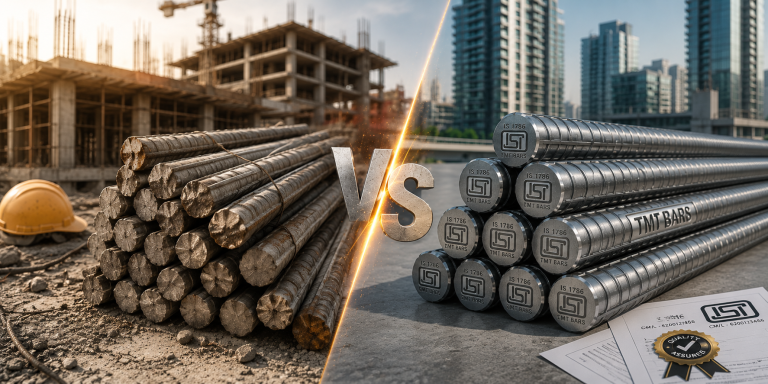
Using certified steel that complies with IS 1786 standards ensures reliable performance in modern construction projects.
Manufacturers such as Ambashakti produce premium-quality TMT bars designed to meet Indian engineering standards and construction requirements.
Learn more: https://www.ambashakti.com/tmt-bars
Asked Questions (FAQs)
What is the difference between Fe500 and Fe550 TMT bars?
The main difference is yield strength. Fe500 bars have 500 MPa strength, while Fe550 bars have 550 MPa strength making them suitable for heavier structures.
What does “D” mean in Fe550D TMT bars?
The letter “D” stands for ductility, which means the steel can stretch more before breaking. This property enhances earthquake resistance and structural flexibility.
Which TMT bar grade is best for house construction?
Fe500 TMT bars are used for residential buildings because they provide a good balance of strength, flexibility and cost-effectiveness.
Are Fe550D TMT bars suitable for earthquake-prone areas?
Yes. Fe550D bars have higher ductility, which allows structures to absorb seismic forces more making them suitable for seismic zones and infrastructure projects.
Conclusion
Picking the right TMT bar grade is crucial to ensure the strength, durability, and safety of reinforced concrete structures. Fe500 Fe550, and Fe550D bars each have different levels of yield strength and ductility, which makes them suitable for various types of construction projects.
Fe500 bars are used for residential buildings, while higher-strength grades like Fe550 and Fe550D are the preferred choice for high-rise construction and infrastructure projects.
The use of high-quality reinforcement steel from trusted manufacturers ensures that structures remain strong, safe, and durable for decades.
To explore high-quality reinforcement steel designed for modern construction,