

Green Steel Manufacturing Process Explained: From Raw Materials to Finished Steel
Quick Answer
The green steel manufacturing process uses low-carbon technologies such as recycled steel processing, electric arc furnaces (EAF), renewable energy, and hydrogen-based steelmaking to reduce carbon emissions compared to traditional steel production. The process focuses on sustainability while maintaining the strength, durability, and quality required for construction and industrial applications.
What is the Green Steel Manufacturing Process?
Green steel manufacturing refers to producing steel using environmentally responsible methods that significantly reduce greenhouse gas emissions, energy consumption, and dependence on fossil fuels.
Unlike conventional steelmaking, which relies heavily on coal-powered blast furnaces, green steel production incorporates cleaner technologies and sustainable practices throughout the manufacturing cycle.
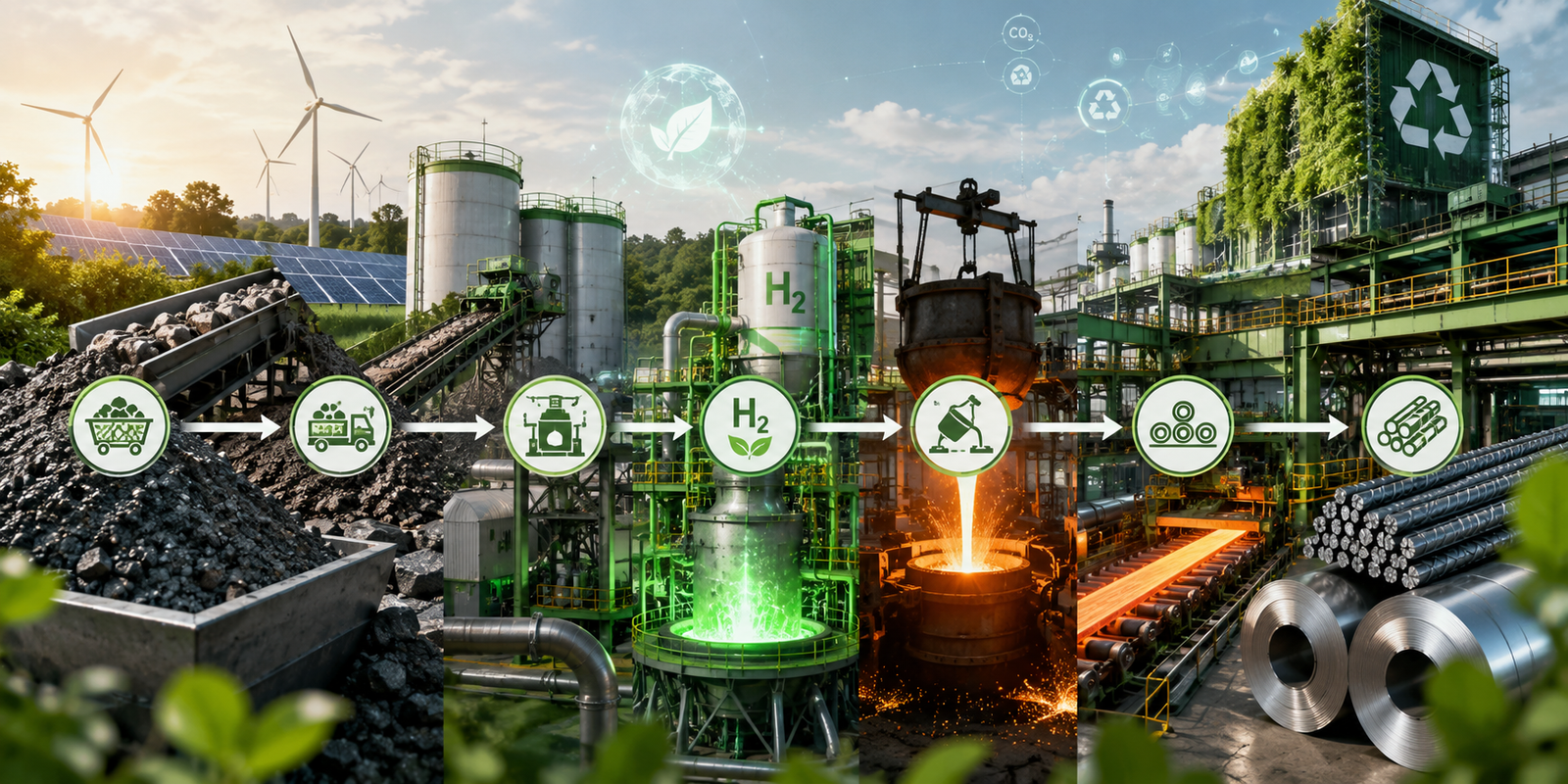
Green Steel Manufacturing Process at a Glance

Raw Material Selection
↓
Steel Scrap Collection
↓
Sorting & Processing
↓
Electric Arc Furnace (EAF)
↓
Hydrogen-Based Reduction (Optional)
↓
Refining & Alloying
↓
Rolling & Finishing
↓
Quality Control Testing
↓
Finished Green Steel Products
Raw Material Selection
Why Raw Materials Matter
The sustainability of steel production begins with responsible raw material sourcing.
Traditional steel production primarily relies on virgin iron ore and coal, which require significant mining and processing activities. Green steel manufacturing prioritizes materials that reduce environmental impact.
Common Raw Materials Used
|
Material |
Purpose |
|
Recycled Steel Scrap |
Primary raw material |
|
Iron Ore |
Used in certain green steel processes |
|
Renewable Energy Inputs |
Power generation |
|
Hydrogen |
Alternative reducing agent |
|
Alloying Elements |
Performance enhancement |
Benefits of Sustainable Raw Material Selection
-
Reduces mining requirements
-
Lowers energy consumption
-
Supports circular economy practices
-
Minimizes industrial waste
-
Reduces carbon emissions
Using recycled steel as a primary input is one of the most effective ways to improve sustainability in steel production.
Electric Arc Furnaces (EAF)
What is an Electric Arc Furnace?
An Electric Arc Furnace (EAF) is a steelmaking technology that uses electricity instead of coal-based blast furnaces to melt steel.
EAF technology is one of the most widely adopted methods for producing green steel.
How Electric Arc Furnaces Work
Step 1: Scrap Steel Loading
Recycled steel scrap is loaded into the furnace.
Step 2: Electric Arc Generation
Powerful electric currents generate heat capable of melting steel.
Step 3: Steel Refining
Impurities are removed while alloying elements are added.
Step 4: Casting and Rolling
The molten steel is processed into usable steel products.
Electric Arc Furnace Process
Steel Scrap
↓
Electric Arc Furnace
↓
Molten Steel
↓
Refining
↓
Finished Steel
Advantages of EAF Technology
|
Benefit |
Impact |
|
Lower Carbon Emissions |
High |
|
Reduced Coal Usage |
High |
|
Increased Recycling |
High |
|
Improved Energy Efficiency |
High |
|
Lower Environmental Impact |
High |
Compared to traditional blast furnace systems, EAF technology can significantly reduce carbon emissions.
Hydrogen-Based Steelmaking
What is Hydrogen Steelmaking?
Hydrogen-based steelmaking is an advanced green steel technology that replaces coal with hydrogen during the iron reduction process.
Instead of producing carbon dioxide, the process primarily generates water vapor.
How Hydrogen-Based Steelmaking Works
Traditional Method
Iron Ore + Coal → Steel + CO₂ Emissions
Hydrogen Method
Iron Ore + Hydrogen → Steel + Water Vapor
Hydrogen Steel Production Process
Iron Ore
↓
Hydrogen Reduction
↓
Direct Reduced Iron (DRI)
↓
Electric Arc Furnace
↓
Finished Green Steel
Benefits of Hydrogen-Based Steelmaking
-
Near-zero carbon emissions
-
Reduced fossil fuel dependence
-
Supports net-zero goals
-
Future-ready manufacturing process
-
Cleaner production cycle
Hydrogen steelmaking is expected to play a major role in achieving carbon-neutral steel production.
Recycled Steel Processing
Why Recycling is Important
Steel is one of the most recyclable materials in the world.
Unlike many construction materials, steel can be recycled repeatedly without losing strength or performance characteristics.
Steel Recycling Process
Collection
Steel scrap is collected from construction sites, manufacturing facilities, and end-of-life products.
Sorting
Materials are separated and classified.
Processing
Scrap is cleaned and prepared for melting.
Melting
Processed scrap is melted using Electric Arc Furnaces.
Manufacturing
New steel products are created from recycled materials.
Recycling Process Flow
Steel Scrap Collection
↓
Sorting & Cleaning
↓
Processing
↓
Electric Arc Furnace
↓
New Steel Production
Recycling Benefits
|
Advantage |
Impact |
|
Reduced Waste |
High |
|
Lower Energy Consumption |
High |
|
Lower Emissions |
High |
|
Resource Conservation |
High |
|
Circular Economy Support |
High |
Steel recycling plays a crucial role in sustainable steel manufacturing.
Quality Control in Green Steel Manufacturing
Why Quality Control Matters
Reducing emissions should never compromise steel performance.
Green steel must meet the same structural and engineering standards as conventionally manufactured steel.
Key Quality Control Measures
Chemical Composition Testing
Ensures the correct balance of alloying elements.
Mechanical Strength Testing
Verifies tensile strength and yield strength.
Dimensional Accuracy Checks
Ensures consistency across production batches.
Surface Inspection
Detects defects and imperfections.
Durability Evaluation
Confirms long-term performance requirements.
Quality Parameters
|
Parameter |
Purpose |
|
Tensile Strength |
Structural reliability |
|
Yield Strength |
Load-bearing capacity |
|
Ductility |
Flexibility |
|
Surface Quality |
Product consistency |
|
Durability |
Long-term performance |
High-quality steel remains essential for safe and reliable construction.
Environmental Benefits of Green Steel Manufacturing
Lower Carbon Emissions
Green steel significantly reduces greenhouse gas emissions compared to conventional steel production.
Reduced Fossil Fuel Dependence
Cleaner technologies decrease reliance on coal and other fossil fuels.
Improved Resource Efficiency
Recycling and sustainable manufacturing maximize material utilization.
Support for Circular Economy
Steel recycling reduces waste and extends material lifecycles.
Sustainable Infrastructure Development
Green steel supports environmentally responsible construction and infrastructure projects.
Green Steel vs Traditional Steel Manufacturing
|
Factor |
Green Steel Manufacturing |
Traditional Steel Manufacturing |
|
Primary Energy Source |
Renewable Energy & Electricity |
Coal & Fossil Fuels |
|
Carbon Emissions |
Low |
High |
|
Recycled Material Usage |
High |
Moderate |
|
Environmental Impact |
Reduced |
Significant |
|
Sustainability |
High |
Low |
|
Future Readiness |
Excellent |
Limited |
Future of Green Steel Manufacturing
Several trends are expected to accelerate adoption:
Hydrogen-Based Production Expansion
Increasing investment in green hydrogen infrastructure.
Renewable Energy Integration
Greater use of solar, wind, and hydroelectric power.
Advanced Recycling Technologies
Improved material recovery and efficiency.
Carbon Reduction Regulations
Governments worldwide are introducing stricter emissions standards.
Sustainable Construction Demand
Builders increasingly prefer low-carbon construction materials.
Frequently Asked Questions
What is the green steel manufacturing process?
Green steel manufacturing uses low-carbon technologies such as electric arc furnaces, recycled steel processing, renewable energy, and hydrogen-based steelmaking to reduce emissions.
How is green steel made?
Green steel is made by melting recycled steel or processing iron ore using cleaner technologies that reduce fossil fuel use and carbon emissions.
What is an Electric Arc Furnace?
An Electric Arc Furnace uses electricity to melt steel instead of coal-powered blast furnaces, reducing emissions and increasing recycling opportunities.
What is hydrogen-based steelmaking?
Hydrogen-based steelmaking replaces coal with hydrogen during iron ore reduction, significantly reducing carbon emissions.
Why is recycled steel important?
Recycled steel reduces waste, conserves natural resources, lowers energy consumption, and supports sustainable manufacturing.
Is green steel as strong as traditional steel?
Yes. Green steel is engineered to meet the same performance and quality standards required for construction and industrial applications.
Conclusion
The green steel manufacturing process represents a major step toward reducing the environmental impact of one of the world’s most important industries. Through sustainable raw material selection, electric arc furnaces, hydrogen-based steelmaking, recycling, and rigorous quality control, manufacturers can produce high-performance steel while significantly lowering carbon emissions.
As demand for sustainable infrastructure continues to grow, green steel manufacturing will play a critical role in shaping the future of construction, industry, and global sustainability.