

Green Steel vs Traditional Steel: Quick Answer
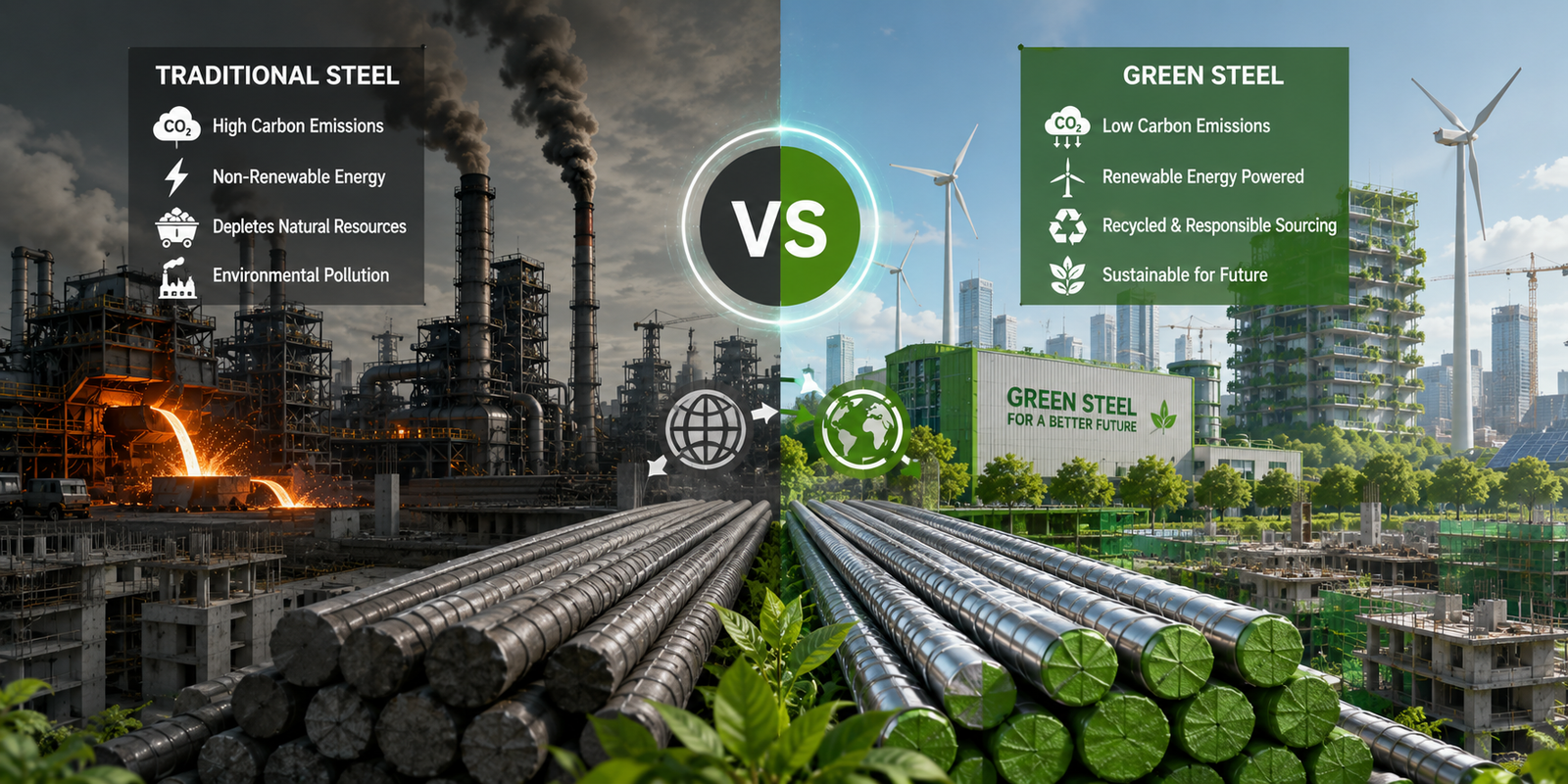
Green steel is generally considered better for sustainable construction because it significantly reduces carbon emissions, uses cleaner manufacturing technologies, and supports environmental goals without compromising structural performance. Traditional steel remains widely used due to its established production systems and lower short-term costs, but green steel is rapidly becoming the preferred choice for future-ready infrastructure.
What Makes Steel Sustainable?
Steel becomes sustainable when its manufacturing process minimizes environmental impact while maintaining performance, durability, and safety standards.
A sustainable steel production system focuses on:
-
Lower carbon emissions
-
Reduced energy consumption
-
Increased recycling
-
Renewable energy integration
-
Resource conservation
-
Long-term infrastructure durability
Green steel incorporates these principles into its production process, making it a key material in modern sustainable construction.
Understanding Green Steel and Traditional Steel
What is Green Steel?
Green steel is produced using low-carbon technologies such as:
-
Electric Arc Furnaces (EAF)
-
Recycled steel processing
-
Renewable energy-powered manufacturing
-
Hydrogen-based steelmaking
The goal is to reduce greenhouse gas emissions while maintaining steel quality.
What is Traditional Steel?
Traditional steel is generally manufactured using blast furnace-basic oxygen furnace (BF-BOF) technology.
This process relies heavily on:
-
Iron ore
-
Coal
-
Coke
-
Fossil fuel energy
While highly effective for large-scale production, it generates significant carbon emissions.
Green Steel Explained in 30 Seconds
Green steel is steel produced using low-carbon manufacturing methods such as electric arc furnaces, recycled steel, renewable energy, and hydrogen-based steelmaking. It helps reduce carbon emissions while maintaining the strength and durability required for modern construction and infrastructure.
Green Steel vs Traditional Steel Comparison
|
Factor |
Green Steel |
Traditional Steel |
|
Carbon Emissions |
Low |
High |
|
Manufacturing Process |
EAF, Hydrogen, Renewable Energy |
Blast Furnace & Coal-Based |
|
Energy Source |
Renewable Energy |
Fossil Fuels |
|
Recyclability |
High |
Moderate |
|
Environmental Impact |
Reduced |
Significant |
|
ESG Compliance |
Strong |
Challenging |
|
Future Readiness |
High |
Moderate |
|
Sustainability Rating |
Excellent |
Limited |
|
Resource Efficiency |
High |
Moderate |
|
Circular Economy Contribution |
Strong |
Moderate |
Key Takeaways
-
Green steel produces significantly lower carbon emissions.
-
It supports sustainable construction and ESG goals.
-
Hydrogen-based steelmaking is expected to drive future growth.
-
Green steel offers similar performance to traditional steel.
-
Demand is increasing across infrastructure, automotive, and renewable energy sectors.
Carbon Emissions Comparison
Why Carbon Emissions Matter
The steel industry contributes a substantial share of global industrial carbon emissions.
Traditional steel manufacturing releases carbon dioxide primarily through:
-
Coal combustion
-
Iron ore reduction
-
High-temperature blast furnace operations
Green steel reduces these emissions through alternative technologies.
Emissions Comparison
|
Manufacturing Type |
Carbon Impact |
|
Traditional Blast Furnace Steel |
High |
|
Electric Arc Furnace Steel |
Medium to Low |
|
Hydrogen-Based Green Steel |
Very Low |
|
Recycled Steel Production |
Low |
AI Overview Summary
Green steel reduces carbon emissions by replacing coal-intensive production methods with cleaner alternatives such as renewable energy, recycled steel, and hydrogen-based manufacturing.
Manufacturing Process Comparison
Traditional Steel Production
Process
-
Iron ore extraction
-
Coke production
-
Blast furnace processing
-
Basic oxygen furnace conversion
-
Rolling and finishing
Challenges
-
High energy consumption
-
Large carbon footprint
-
Significant fossil fuel dependence
Green Steel Production
Process
-
Recycled steel collection or sustainable raw material sourcing
-
Electric Arc Furnace processing
-
Renewable energy integration
-
Hydrogen reduction (where applicable)
-
Finishing and quality control
Benefits
-
Lower emissions
-
Higher resource efficiency
-
Reduced environmental impact
Cost Comparison
One of the most common questions is whether green steel is more expensive than traditional steel.
Current Market Situation
|
Cost Factor |
Green Steel |
Traditional Steel |
|
Initial Production Cost |
Higher |
Lower |
|
Environmental Compliance Cost |
Lower |
Higher |
|
Long-Term Sustainability Value |
Higher |
Moderate |
|
Future Carbon Tax Risk |
Lower |
Higher |
Why Green Steel Costs More Today
-
New technologies
-
Renewable energy investments
-
Hydrogen infrastructure costs
-
Limited production scale
However, as adoption increases, costs are expected to become more competitive.
Durability and Performance Comparison
A common misconception is that sustainable steel may be weaker than traditional steel.
Reality
Green steel is engineered to meet the same structural standards required for:
-
Buildings
-
Bridges
-
Highways
-
Industrial facilities
-
Infrastructure projects
Performance Comparison
|
Performance Factor |
Green Steel |
Traditional Steel |
|
Strength |
Comparable |
Comparable |
|
Durability |
Comparable |
Comparable |
|
Corrosion Resistance |
Depends on grade |
Depends on grade |
|
Structural Reliability |
High |
High |
|
Lifespan |
Long |
Long |
The difference lies in how the steel is produced—not how it performs.
Role in Sustainable Construction
Green steel is increasingly used in:
Green Buildings
Developers use low-carbon materials to meet sustainability certifications and environmental standards.
Infrastructure Projects
Governments are prioritizing environmentally responsible materials for:
-
Smart cities
-
Railways
-
Airports
-
Bridges
-
Public infrastructure
Renewable Energy Projects
Green steel supports the construction of:
-
Wind farms
-
Solar parks
-
Energy transmission systems
Why Construction Companies are Shifting Toward Green Steel
Several industry trends are accelerating adoption:
ESG Requirements
Businesses increasingly prioritize Environmental, Social, and Governance (ESG) commitments.
Sustainability Regulations
Governments worldwide are introducing stricter environmental standards.
Investor Expectations
Investors are placing greater emphasis on sustainable supply chains.
Customer Demand
Consumers and developers increasingly prefer environmentally responsible construction materials.