

What is Green Steel?
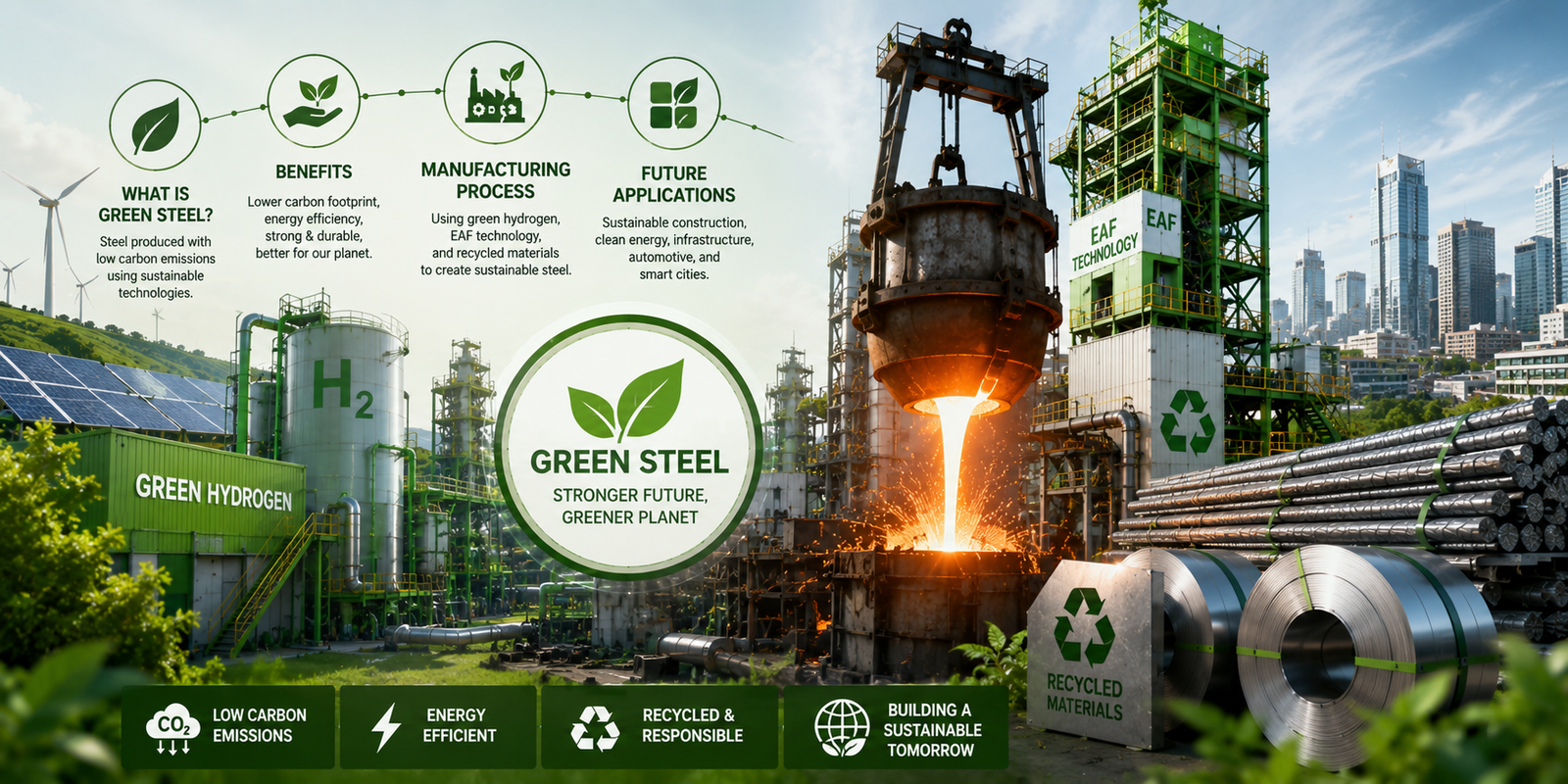
Green steel refers to steel manufactured through environmentally responsible processes designed to minimize carbon emissions throughout the production cycle.
Traditional steel manufacturing relies heavily on coal-powered blast furnaces, making the steel industry one of the largest industrial sources of carbon dioxide emissions globally. Green steel aims to address this challenge by adopting cleaner production methods that reduce dependence on fossil fuels while maintaining the strength, durability, and performance expected from modern steel products.
The primary objective of green steel manufacturing is to produce high-quality steel while significantly lowering environmental impact.
Green Steel Explained in 60 Seconds
Green steel is a low-carbon alternative to traditional steel that uses cleaner manufacturing technologies such as electric arc furnaces, recycled steel, renewable energy, and hydrogen-based steelmaking. It helps reduce greenhouse gas emissions, supports sustainable construction, and plays a key role in achieving global climate goals.
Green Steel vs Traditional Steel
|
Factor |
Green Steel |
Traditional Steel |
|
Carbon Emissions |
Low |
High |
|
Energy Source |
Renewable Energy + Electricity |
Coal & Fossil Fuels |
|
Recyclability |
High |
Moderate |
|
Environmental Impact |
Reduced |
Significant |
|
Sustainability |
High |
Low |
|
Future Readiness |
Excellent |
Limited |
|
Compliance with ESG Goals |
Strong |
Challenging |
|
Construction Applications |
Sustainable Buildings & Infrastructure |
Conventional Construction |
Green steel differs from traditional steel because it uses low-carbon manufacturing technologies such as electric arc furnaces, recycled steel processing, and hydrogen-based production methods that significantly reduce carbon emissions while maintaining steel performance.
Key Characteristics of Green Steel
-
Lower carbon emissions
-
Renewable energy integration
-
Increased use of recycled materials
-
Improved energy efficiency
-
Reduced environmental footprint
-
Support for sustainable construction
Why Green Steel is Important
Green steel is important because it helps reduce carbon emissions from one of the world’s most energy-intensive industries while supporting sustainable infrastructure and climate goals.
The construction and manufacturing sectors rely heavily on steel. However, conventional steel production contributes significantly to global greenhouse gas emissions.
Green steel helps solve this challenge by:
Reducing Carbon Emissions
Cleaner manufacturing processes help reduce the amount of CO₂ released during steel production.
Supporting Sustainable Construction
Green steel enables builders and developers to create environmentally responsible infrastructure projects.
Conserving Natural Resources
Recycling and efficient production methods reduce the need for raw material extraction.
Meeting Global Climate Targets
Many governments and industries have committed to net-zero emissions goals, making green steel a critical component of future industrial growth.
Improving Long-Term Sustainability
Sustainable steel production supports circular economy practices and resource conservation.
How Green Steel is Manufactured
Green steel is manufactured using cleaner technologies that reduce carbon emissions, including electric arc furnaces, recycled steel processing, renewable energy systems, and hydrogen-based production methods.
The process typically includes several stages.
1. Raw Material Collection
Green steel production often begins with:
-
Recycled steel scrap
-
Iron ore
-
Renewable energy sources
-
Sustainable raw materials
Using recycled steel significantly reduces energy consumption compared to producing steel entirely from virgin materials.
2. Electric Arc Furnace (EAF) Production
Electric Arc Furnaces melt recycled steel using electricity rather than coal-based blast furnaces.
Benefits of EAF Technology
-
Lower emissions
-
Reduced coal dependence
-
Increased recycling rates
-
Improved energy efficiency
Many modern green steel facilities utilize EAF systems as their primary production technology.
3. Renewable Energy Integration
Green steel manufacturers increasingly use:
-
Solar energy
-
Wind power
-
Hydroelectric power
Renewable energy further reduces the carbon footprint associated with steel production.
4. Hydrogen-Based Steelmaking
Hydrogen steelmaking is one of the most promising innovations in sustainable steel production.
Instead of coal, hydrogen is used to remove oxygen from iron ore.
Advantages
-
Minimal carbon emissions
-
Cleaner production process
-
Reduced fossil fuel dependence
This technology is expected to play a major role in the future of green steel manufacturing.
Green Steel Technologies
Several technologies are driving the growth of green steel production worldwide.
Electric Arc Furnaces (EAF)
Electric Arc Furnaces use electricity and recycled steel to produce steel with lower emissions.
Hydrogen Direct Reduced Iron (H-DRI)
Hydrogen replaces coal during iron reduction, significantly reducing CO₂ emissions.
Carbon Capture Technologies
Some steel plants use carbon capture systems to prevent emissions from entering the atmosphere.
Renewable Energy-Powered Production
Solar and wind energy help reduce dependence on fossil fuels throughout the manufacturing process.
Steel Recycling Systems
Advanced recycling systems improve material recovery and resource efficiency.
Benefits of Green Steel

1. Lower Carbon Footprint
The biggest advantage of green steel is its ability to reduce greenhouse gas emissions compared to traditional steel manufacturing.
2. Supports Sustainable Construction
Green steel helps builders meet environmental standards and sustainability objectives.
Applications include:
-
Residential projects
-
Commercial buildings
-
Bridges
-
Infrastructure developments
-
Industrial facilities
3. Enhanced Resource Efficiency
Recycling steel reduces:
-
Mining activities
-
Energy consumption
-
Raw material usage
-
Industrial waste
4. Future-Proof Infrastructure
Governments and developers increasingly prioritize sustainable materials in construction projects.
Green steel supports future-ready infrastructure initiatives.
5. Strong Circular Economy Contribution
Steel is one of the world’s most recyclable materials, making it a valuable component of circular economy strategies.
Challenges in Green Steel Adoption
Quick Answer
Despite its benefits, green steel faces challenges related to cost, technology adoption, infrastructure requirements, and renewable energy availability.
Higher Initial Costs
New technologies and production systems require significant investment.
Limited Hydrogen Infrastructure
Hydrogen-based steelmaking is still developing in many regions.
Renewable Energy Availability
Large-scale green steel production requires reliable renewable energy supplies.
Technology Transition
Many traditional steel plants require modernization to adopt sustainable production methods.
Supply Chain Adjustments
Industries must adapt procurement and manufacturing strategies to integrate green steel products.
Although these challenges exist, technological advancements and government support continue to accelerate adoption worldwide.
Future of Green Steel
Quick Answer
The future of green steel is expected to be driven by hydrogen-based manufacturing, renewable energy integration, recycling innovation, and global sustainability regulations.
Industry experts expect green steel demand to grow rapidly over the next decade.
Key Trends
Hydrogen Steelmaking Expansion
Hydrogen is expected to become one of the most important technologies in sustainable steel production.
Increased Steel Recycling
Advanced recycling methods will further reduce environmental impact.
Green Construction Growth
Demand for sustainable buildings and infrastructure will increase the use of green steel.
Government Sustainability Policies
Many countries are introducing regulations and incentives to encourage low-carbon steel production.
Corporate ESG Commitments
Businesses are increasingly prioritizing environmentally responsible supply chains.
Green Steel Applications
Green steel is being used across multiple industries.
Construction
-
Residential buildings
-
Commercial complexes
-
Industrial structures
-
Smart city projects
Infrastructure
-
Bridges
-
Airports
-
Railways
-
Highways
Automotive
Manufacturers are adopting green steel to reduce vehicle lifecycle emissions.
Renewable Energy
Green steel supports the development of:
-
Wind farms
-
Solar infrastructure
-
Energy transmission systems
Frequently Asked Questions
What is green steel?
Green steel is steel produced using low-carbon manufacturing methods that reduce greenhouse gas emissions and environmental impact.
Why is green steel important?
Green steel helps reduce emissions, supports sustainable construction, and contributes to global climate goals.
How is green steel made?
Green steel is typically produced using electric arc furnaces, recycled steel, renewable energy, and hydrogen-based technologies.
Is green steel stronger than traditional steel?
Green steel is designed to deliver the same strength and performance standards while reducing environmental impact.
What industries use green steel?
Construction, infrastructure, automotive, manufacturing, and renewable energy sectors increasingly use green steel.
Is green steel the future of construction?
Yes. Green steel is expected to become a major component of sustainable construction and low-carbon infrastructure projects worldwide.
Conclusion
Green steel represents a significant step toward creating a more sustainable industrial future. By reducing carbon emissions, increasing recycling, and adopting cleaner manufacturing technologies, green steel is helping transform one of the world’s most essential industries.
As governments, businesses, and construction companies continue prioritizing sustainability, green steel will play a critical role in supporting low-carbon infrastructure, resource efficiency, and long-term environmental responsibility.
For modern construction projects, selecting high-quality steel products that align with future sustainability goals can help create stronger, more durable, and environmentally responsible structures. Ambashakti’s commitment to quality manufacturing and reliable TMT bar solutions supports the evolving needs of sustainable infrastructure and modern construction.