
The construction industry is increasingly looking beyond strength, durability and cost when selecting building materials. Environmental impact is also becoming an important consideration, particularly for large buildings, infrastructure projects and developments with sustainability targets.
This is where green steel can play an important role.
Steel is already one of the most widely used construction materials because of its strength, versatility and recyclability. Green steel focuses on reducing the environmental and greenhouse-gas footprint associated with producing that steel.
But what exactly is green steel? Is green steel as strong as conventional steel? How can it be used in construction? And what does sustainable steel mean for builders, developers and infrastructure companies?
This guide explains the benefits, applications and future of green steel for sustainable construction, with a focus on manufacturing technologies, Indian regulations and practical considerations for steel buyers.
Quick Answer: What Is Green Steel?
Green steel is steel produced using manufacturing processes designed to significantly reduce greenhouse-gas emissions and environmental impact compared with a defined conventional or baseline production route.
Depending on the production route, this can involve:
- Recycled steel scrap
- Direct Reduced Iron (DRI)
- Energy-efficient furnaces
- Electric or induction melting
- Renewable electricity
- Waste-heat recovery
- Improved material efficiency
- Process integration
- Lower-carbon ironmaking technologies
- Green hydrogen in emerging production routes
There is no single technology that automatically makes steel “green.” The environmental performance depends on the actual production route, raw materials, energy sources and measured emissions.
India has also established a formal Green Steel Taxonomy, which defines green steel based on emissions intensity. Steel produced below 2.2 tonnes of CO₂e per tonne of finished steel can qualify for a green rating under the current framework, subject to its methodology and certification requirements.
Why Is Green Steel Important for Sustainable Construction?
Construction requires large quantities of steel.
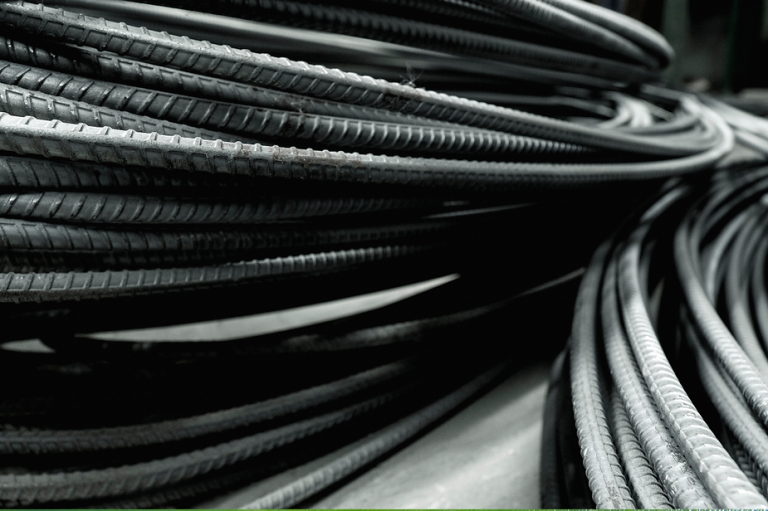
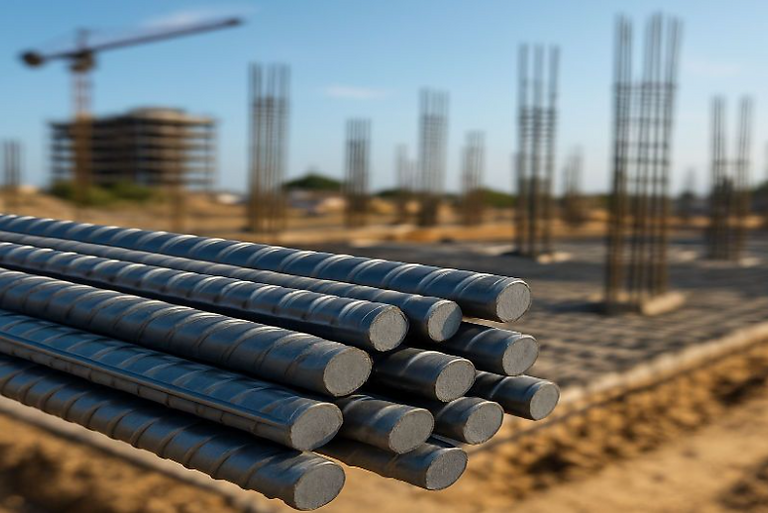
TMT bars are used to reinforce concrete, while structural steel is used in buildings, industrial structures, warehouses, bridges and other infrastructure.
As construction projects increasingly measure environmental performance, the emissions associated with producing construction materials can become an important procurement consideration.
Green steel can contribute to sustainable construction by helping address:
- Embodied carbon
- Resource consumption
- Energy use
- Industrial waste
- Material circularity
- Construction-sector sustainability targets
However, green steel is only one component of sustainable construction. The overall environmental performance of a project also depends on concrete, cement, glass, aluminium, transportation, construction methods, building operations and end-of-life recovery.
Green Steel vs Conventional Steel
The main difference between green and conventional steel is generally how the steel is produced, rather than simply how the finished product performs.
| Factor | Green Steel | Conventional Steel |
| Production objective | Lower environmental and emissions footprint | Varies by production route |
| Recycled inputs | Can use a higher proportion of suitable recycled steel | Varies |
| Energy efficiency | Strong focus on reducing energy intensity | Varies by facility |
| Electricity | May use renewable or lower-carbon electricity | Depends on plant and grid |
| Waste heat | Can be recovered and reused | Depends on facility |
| Carbon emissions | Designed to reduce emissions intensity | Varies significantly by route |
| Product performance | Must meet applicable technical standards | Must meet applicable technical standards |
| Circularity | Strong emphasis on recycling and resource efficiency | Varies |
The comparison should therefore be based on actual production data rather than the label alone.
Is Green Steel as Strong as Conventional Steel?
Green steel is not inherently weaker than conventional steel.
The environmental footprint and mechanical properties are separate considerations.
For construction reinforcement, a TMT bar must still meet its required:
- Grade
- Yield strength
- Tensile strength
- Ductility
- Dimensions
- Bend requirements
- Applicable BIS/IS standard
- Quality requirements
Ambashakti states that its Green Steel TMT bars meet the same IS 1786 standards as its conventional bars, with the difference being in the manufacturing inputs and energy used rather than the required strength standard.
How Is Green Steel Made?
There is no single green-steel manufacturing process.
A simplified production chain can look like:
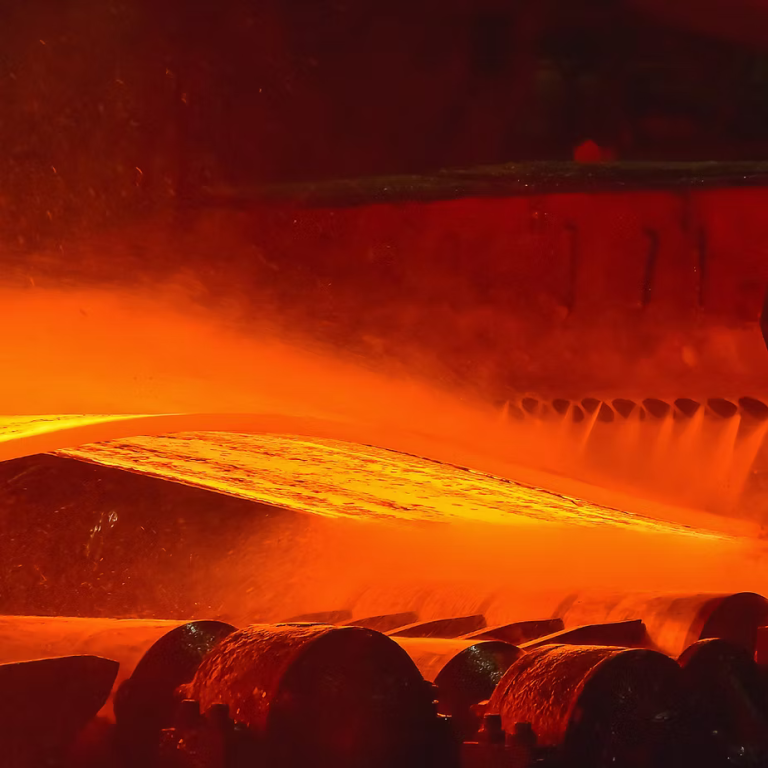
Raw Materials → DRI / Scrap → Steel Melting → Continuous Casting → Billets → Rolling → Finished Steel
Sustainability improvements can be introduced throughout this chain.
1. Recycled Steel Scrap
Steel can be recycled and returned to the steelmaking process as a raw material.
Using suitable scrap can reduce dependence on virgin raw materials and supports the circular use of steel.
Ambashakti’s Green Steel page identifies recycled steel scrap as a significant part of its stated production approach.
Explore Ambashakti Green Steel
2. Direct Reduced Iron
Direct Reduced Iron, or DRI, also known as sponge iron, is an iron-bearing input used in steelmaking.
Its environmental performance depends on how the DRI is produced, what reductant is used and what energy source powers the process.
Ambashakti produces sponge iron and uses DRI alongside processed scrap in induction-furnace steelmaking. Its current sponge-iron page describes the use of DRI as an input for producing billet steel.
Explore Ambashakti Sponge Iron
3. Efficient Steel Melting
Efficient electric and induction melting can reduce energy consumption compared with less-efficient processes.
Ambashakti describes high-efficiency induction furnaces as part of its Green Steel manufacturing approach.
The overall emissions impact still depends on the electricity source and the efficiency of the individual plant.
4. Waste-Heat Recovery
Industrial processes generate heat that can otherwise be lost.
Waste-heat recovery captures this energy and converts it into useful power or process heat.
Ambashakti states that hot gases from its DRI process are passed through waste-heat recovery systems to generate captive power.
5. Renewable Energy
Solar and other lower-carbon electricity sources can reduce emissions associated with electricity-intensive manufacturing.
Ambashakti’s Green Steel page identifies solar power and recovered captive power as components of its stated approach.
6. Integrated Manufacturing
Integrating multiple production stages can reduce unnecessary transportation, reheating and intermediate processing.
Ambashakti describes an integrated manufacturing system covering raw-material processing, sponge iron, billets and finished steel products.
What Are the Benefits of Green Steel for Construction?
1. Lower Embodied Carbon
One of the main reasons construction companies consider green steel is the potential to reduce the embodied greenhouse-gas emissions associated with steel production.
Lower-emission steel can support projects with embodied-carbon targets.
2. Resource Efficiency
Using recycled steel and recovering energy can reduce waste and improve resource utilisation.
3. Circular Material Use
Steel is highly recyclable.
Construction steel recovered at the end of a building’s useful life can potentially return to the steelmaking cycle.
This makes steel relevant to circular-construction strategies.
4. Energy Efficiency
Waste-heat recovery, efficient furnaces and integrated production can reduce energy losses.
5. Sustainability Goals
Developers increasingly have sustainability objectives related to:
- ESG reporting
- Embodied carbon
- Green-building certifications
- Corporate sustainability
- Supply-chain emissions
- Environmental procurement
Green steel can form one part of those strategies.
Green Steel and Green Building Certifications
Green steel can be particularly relevant to projects pursuing environmental building certifications.
The exact treatment of steel varies according to the certification system and project methodology, but lower-carbon construction materials can contribute to broader embodied-carbon objectives.
Projects may consider:
- Product environmental data
- Embodied carbon
- Recycled content
- Manufacturing emissions
- Responsible sourcing
- Material traceability
Ambashakti specifically positions its Green Steel for applications including green-certified buildings and sustainable housing.
Green Steel Applications in Construction
Green steel can potentially be used in many construction and infrastructure applications.
Residential Construction
TMT reinforcement bars can be used in:
- Houses
- Apartments
- Villas
- Residential complexes
Ambashakti’s Green Steel page positions its lower-carbon TMT bars for residential construction while maintaining IS 1786 compliance.
Commercial Buildings
Green steel can be incorporated into:
- Offices
- Shopping centres
- Hotels
- Commercial complexes
The environmental profile of construction materials can be considered alongside structural design, cost and procurement requirements.
Industrial Buildings
Steel is widely used for:
- Factories
- Warehouses
- Manufacturing facilities
- Industrial sheds
Structural sections such as angles and channels can form part of steel frameworks and fabricated structures.
Bridges and Infrastructure
Large infrastructure projects can consume substantial quantities of reinforcement and structural steel.
Potential applications include:
- Bridges
- Flyovers
- Roads
- Rail infrastructure
- Metro projects
- Public infrastructure
Renewable-Energy Infrastructure
Solar farms, transmission infrastructure and other energy projects also require substantial quantities of steel.
Using lower-carbon steel can therefore connect steel-sector decarbonisation with the wider clean-energy transition.
Green Steel for TMT Bars
TMT bars are particularly relevant because reinforcement steel is embedded in concrete and forms a critical part of RCC structures.
When selecting green TMT bars, buyers should evaluate two categories separately.
Environmental criteria
- Manufacturing emissions
- Recycled content
- Energy sources
- Waste-heat recovery
- Environmental management
- Green-steel certification, where applicable
Technical criteria
- TMT grade
- Yield strength
- Tensile strength
- Ductility
- Diameter
- Weight
- Rib pattern
- BIS/IS compliance
- Test documentation
Ambashakti currently lists FE550, FE550D and FE550CRS TMT products and states that its TMT products meet applicable IS 1786 requirements.
Green Steel and Structural Steel
Sustainable construction is not limited to reinforcement steel.
Structural steel such as angles and channels is used in:
- Industrial frameworks
- Warehouses
- Fabrication
- Steel structures
- Infrastructure
Ambashakti manufactures steel billets used to produce TMT bars, angles, channels and other structural products. Its billet page states that the production process uses induction furnace technology and continuous casting.
Explore Ambashakti Steel Billets
The Role of Steel Billets in Sustainable Steel
Steel billets are semi-finished products that sit between steelmaking and finished rolled products.
A simplified route is:
Scrap + DRI → Steel Melting → Continuous Casting → Billets → Rolling → TMT / Structural Steel
Billet quality affects the consistency and performance of downstream products.
Ambashakti states that its billets conform to IS 2830 and are used to manufacture TMT bars, angles, channels and other steel products.
Sustainable Steel Production at Ambashakti
Ambashakti describes sustainability as part of its steel manufacturing process rather than a separate post-production initiative.
Its current Green Steel information identifies:
- Recycled steel scrap
- In-house DRI
- Waste-heat recovery
- High-efficiency induction melting
- Captive power
- Solar power
- Integrated manufacturing
- Closed-loop water systems
- ISO 14001 environmental management
as elements of its Green Steel approach.
Its quality-process page describes integrated manufacturing from iron ore to sponge iron, billets and finished steel products, alongside power generation and quality-control systems.
Explore Ambashakti Green Steel
Explore Ambashakti Steel Plants
What Is India’s Green Steel Taxonomy?
India has established one of the more structured national approaches to defining green steel.
The Ministry of Steel’s taxonomy defines green steel according to CO₂e emissions intensity per tonne of finished steel. The current threshold is below 2.2 tCO₂e/t finished steel.
The framework provides three green ratings:
| Rating | Emissions Intensity |
| 5-Star Green Steel | Below 1.6 tCO₂e/t finished steel |
| 4-Star Green Steel | 1.6–2.0 tCO₂e/t finished steel |
| 3-Star Green Steel | 2.0–2.2 tCO₂e/t finished steel |
| Not eligible for green rating | Above 2.2 tCO₂e/t finished steel |
The taxonomy states that the emissions scope includes Scope 1, Scope 2 and limited Scope 3 emissions up to finished steel production, and the threshold is scheduled for review every three years.
This is important for construction buyers because it provides a more measurable framework for assessing green-steel claims.
Does Green Steel Mean Carbon-Neutral Steel?
No.
These terms should not be treated as interchangeable.
Green Steel
A broad term for steel produced with a significantly lower environmental or emissions footprint. In India, green steel can now also be evaluated under the national taxonomy.
Low-Carbon Steel
Steel produced with lower greenhouse-gas emissions than a defined conventional or baseline route.
Carbon-Neutral Steel
Steel for which emissions are balanced through a defined accounting and emissions-removal or compensation framework.
Therefore:
Green steel ≠ automatically carbon-neutral steel.
Buyers should examine the actual emissions data, methodology and certification behind a sustainability claim.
How to Evaluate Green Steel for a Construction Project
Before specifying green steel, procurement teams can ask manufacturers for:
1. Carbon Intensity
What are the emissions per tonne of finished steel?
2. Measurement Boundary
Does the figure include Scope 1, Scope 2 and applicable Scope 3 emissions?
3. Green-Steel Certification
Has the steel been assessed under India’s Green Steel Taxonomy or another recognised framework?
4. Raw-Material Mix
What proportion of the steel comes from recycled scrap, DRI and other inputs?
5. Energy Source
What percentage of electricity comes from renewable or recovered sources?
6. Environmental Management
Does the manufacturing facility operate under a recognised environmental management system?
7. Technical Certification
Does the actual product meet the applicable BIS/IS standard?
8. Traceability
Can the supplier provide batch-level or product-level documentation?
This approach helps buyers distinguish measurable environmental performance from general marketing claims.
Green Steel vs Sustainable Steel
Green steel and sustainable steel are related but not exactly the same.
Sustainable steel production is the broader concept.
It can include:
- Lower greenhouse-gas emissions
- Energy efficiency
- Water conservation
- Waste reduction
- Recycling
- Resource efficiency
- Responsible sourcing
- Product durability
- Circularity
Green steel generally focuses more strongly on environmental and emissions performance.
Therefore:
Sustainable steel = broader sustainability approach
Green steel = lower-impact steel production
Future of Green Steel in Construction
The role of green steel is likely to increase as construction companies and governments place greater emphasis on embodied carbon and sustainable procurement.
Important developments include:
Green Hydrogen
Hydrogen-based DRI could provide a lower-emission route for primary iron production.
Renewable Electricity
Greater renewable-electricity availability can reduce emissions from electrically powered steelmaking.
Advanced Recycling
Improved scrap collection, sorting and processing can increase circular steel use.
Carbon Management
CCUS and other carbon-management technologies may support hard-to-abate production routes.
Digital Manufacturing
Digital monitoring can improve energy efficiency, process control and emissions measurement.
Green-Steel Certification
Frameworks such as India’s Green Steel Taxonomy can help make environmental claims more measurable and comparable.
Green Steel and the Future of Sustainable Construction
The construction industry is moving toward a more complete approach to material selection.
Instead of asking only:
“Is this steel strong enough?”
projects increasingly need to consider:
“Is this steel technically suitable, resource-efficient, traceable and aligned with the project’s environmental goals?”
Green steel can contribute to that transition.
However, sustainable construction still requires a balanced assessment of:
Performance + Durability + Cost + Availability + Carbon Footprint + Circularity
Green steel should therefore complement engineering requirements rather than replace them.
Frequently Asked Questions
What is green steel?
Green steel is steel produced using manufacturing processes designed to significantly reduce greenhouse-gas emissions and environmental impact compared with a defined conventional or baseline production route.
What are the benefits of green steel for construction?
Green steel can help reduce the embodied carbon associated with construction materials, improve resource efficiency and support projects with sustainability or green-building objectives.
Is green steel as strong as conventional steel?
Green steel can meet the same required technical standards as conventional steel. The environmental profile of the manufacturing process does not by itself determine the mechanical strength of the finished product.
How is green steel made?
Green steel can be manufactured using recycled steel scrap, DRI, efficient electric or induction melting, renewable electricity, waste-heat recovery, process integration and emerging technologies such as green hydrogen.
Is recycled steel green steel?
Recycled steel can contribute to lower-emission steelmaking, but recycled content alone does not automatically make a product green steel. The relevant emissions-intensity methodology and certification requirements must also be considered.
What is sustainable steel?
Sustainable steel refers to steel produced with broader attention to environmental and resource performance, including emissions, energy, water, recycling, waste management and material efficiency.
What is India’s Green Steel Taxonomy?
India’s Green Steel Taxonomy is a national framework that classifies green steel according to CO₂e emissions intensity per tonne of finished steel. The current eligibility threshold is below 2.2 tCO₂e per tonne of finished steel.
What is 5-star green steel in India?
Under India’s current taxonomy, 5-star green steel has an emissions intensity below 1.6 tCO₂e per tonne of finished steel.
Can green steel be used for house construction?
Yes, provided the specific TMT or structural-steel product meets the required grade, applicable standards and structural specifications.
How does Ambashakti produce Green Steel?
Ambashakti describes its Green Steel approach as using recycled steel scrap, in-house DRI, waste-heat recovery, high-efficiency induction melting, captive power, solar power and integrated manufacturing.
Related Ambashakti Resources
What Is Green Steel? Benefits, Manufacturing Process & Future Applications
Understand the meaning of green steel, its manufacturing process, benefits and future applications.
Green Steel Manufacturing in India
Learn how green steel is produced in India and explore technologies including DRI, recycled steel, induction melting, renewable energy and waste-heat recovery.
Read Green Steel Manufacturing in India
Sustainable Steel vs Conventional Steel
Compare sustainable and conventional steel production, including raw materials, energy use, emissions and resource efficiency.
Read Sustainable Steel vs Conventional Steel
Low-Carbon Steel Production
Explore low-carbon steel technologies, DRI, electric melting, hydrogen and other decarbonisation pathways.
Read the Low-Carbon Steel Guide
Carbon-Neutral Steel
Understand the meaning of carbon-neutral steel and how it differs from low-carbon and green steel.
Read the Carbon-Neutral Steel Guide
Ambashakti Green Steel
Explore Ambashakti’s current Green Steel production approach.
Steel Billets
Learn how billets are produced and how they become TMT bars and structural steel.
Sponge Iron
Learn about DRI/sponge iron and its role in steelmaking and captive energy generation.
Steel Plants
Explore Ambashakti’s integrated manufacturing plants across India.
Final Takeaway
Green steel can play an important role in sustainable construction by reducing the environmental footprint associated with steel production while maintaining the technical performance required for construction.
The transition depends on a combination of:
Recycled Steel + DRI + Efficient Melting + Renewable/Recovered Energy + Waste-Heat Recovery + Process Efficiency + Emerging Low-Carbon Technologies
India’s Green Steel Taxonomy now provides a measurable framework for classifying green steel based on emissions intensity, with the current eligibility threshold below 2.2 tCO₂e per tonne of finished steel.
For construction projects, green steel should be evaluated on both sides of the equation:
Environmental Performance + Engineering Performance
That means checking emissions intensity, certification and manufacturing practices alongside grade, strength, ductility, quality, traceability and project requirements.
Ambashakti currently describes its Green Steel approach as using recycled inputs, in-house DRI, recovered waste heat, high-efficiency induction melting, captive and solar power, integrated manufacturing and closed-loop water systems.