
Top 10 TMT Bars (Sariya) in India 2026: Best Brands Compared
Last updated: 2 November 2026 · Published by Amba Shakti Industries
Quick answer
There is no single best TMT bar for every building. The right choice depends on four things: the grade your structural engineer specifies (Fe 500D suits most low-rise homes; Fe 550D is used for taller or more heavily loaded structures), your seismic zone, your climate (coastal areas need corrosion-resistant bars) and which BIS-certified brands your local dealers actually stock.
This guide compares ten widely available brands — Amba Shakti, Captain, Jindal Panther, JSW Neosteel, Kamdhenu, SAIL, Shyam Steel, SRMB, Tata Tiscon and Vizag Steel (RINL) — and explains grades, sizes, price factors and how to spot fake bars. Sariya is the everyday Hindi word for these bars, so you will see both terms used here.
Disclosure: This article is published by Amba Shakti. We list ourselves first because it is our website; the other nine brands follow in alphabetical order. This is a curated comparison, not an independent ranking.
Watch: Understanding the Best TMT Bars for Construction in India
TMT bar brands at a glance
| Brand | Made by | Typical grades | Best suited for |
| Amba Shakti | Amba Shakti Group (integrated plants) | Fe 550, Fe 550D, Fe 550 CRS | North and Central India homes; seismic zones; coastal projects (CRS) |
| Captain | Captain Steel | Fe 500, Fe 550, Fe 600 EQR | Eastern India, Bihar, West Bengal; residential, commercial and infrastructure construction |
| Jindal Panther | Jindal Steel & Power | Fe 500D, Fe 550D | Residential and commercial construction |
| JSW Neosteel | JSW Steel | Fe 500D, Fe 550D | Multi-storey and infrastructure work |
| Kamdhenu | Kamdhenu (licensed manufacturing network) | Fe 500D, Fe 550D | General residential construction |
| SAIL | Steel Authority of India (government-owned) | Fe 500D, Fe 550D | Public projects; buyers who want a PSU brand |
| Shyam Steel | Shyam Steel Industries | Fe 500D, Fe 550D | Eastern India; heavy RCC |
| SRMB | SRMB Srijan | Fe 500D, Fe 550D | Eastern India |
| Tata Tiscon | Tata Steel | Fe 500D, Fe 550D | Premium residential and large projects |
| Vizag Steel | RINL (government-owned) | Fe 500D, Fe 550D | South and East India; public projects |
How to judge a TMT bar brand
Whatever brand you consider, check these seven things. They are the criteria used in this guide.
| What to check | Why it matters | How to verify |
| BIS certification (IS 1786) | Confirms the bar meets Indian strength, ductility and chemistry requirements | Ask for the BIS licence number and look it up on the BIS website or BIS Care app |
| Grade and ductility | Fe 500D / Fe 550D bars bend more before failing, which matters in earthquakes | Read the grade stamped on the bar and printed on the test certificate |
| Manufacturing route | Integrated plants control quality from raw material to billet; re-rolling mills depend on bought-in billets | Ask whether the producer makes its own billets |
| Corrosion resistance | Humid and coastal air attacks ordinary steel inside concrete | Look for CRS-grade bars with a test report |
| Weight and dimensions | Under-weight bars carry less load than the drawing assumes | Weigh a one-metre cut and compare with the chart below |
| Dealer availability | A good brand is useless if genuine stock is not nearby | Confirm authorised dealers in your city |
| Project track record | Large public and private projects show consistent supply | Ask for named references |
TMT bar grades explained: Fe 415, Fe 500, Fe 500D, Fe 550, Fe 550D
The number after “Fe” is the minimum yield strength in megapascals (MPa). The letter “D” means the bar has extra ductility: it stretches more before it breaks and has a higher ratio between ultimate and yield strength. That extra stretch is what helps a building absorb earthquake energy instead of failing suddenly.
| Grade | Minimum yield strength | Typical use |
| Fe 415 | 415 MPa | Older standard; rarely specified for new buildings |
| Fe 500 / Fe 500D | 500 MPa | Most low-rise residential construction |
| Fe 550 / Fe 550D | 550 MPa | Multi-storey buildings, bridges and infrastructure |
For the D grades, IS 1786 sets a minimum elongation of 16% for Fe 500D and 14.5% for Fe 550D. In seismic design, ductile detailing under IS 13920 assumes D-grade bars are used. For a full comparison, read our guide to Fe 500 vs Fe 550 vs Fe 550D.
The 10 brands in detail
1. Amba Shakti
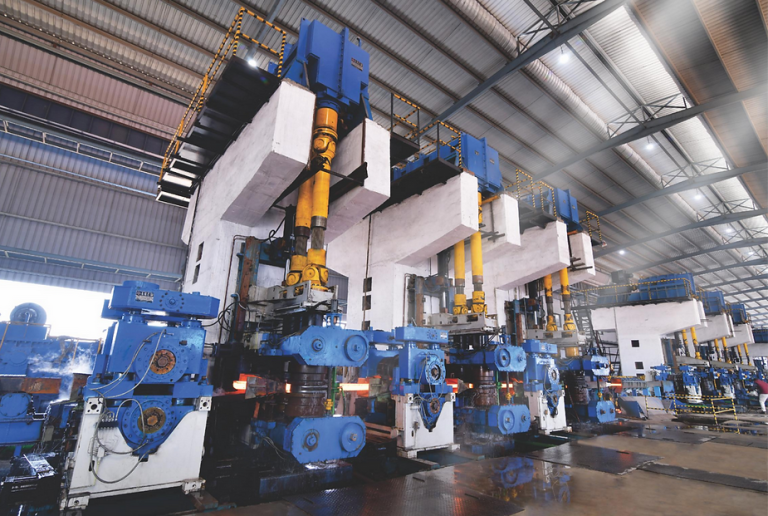
Amba Shakti has been in the steel business since 1974 and launched the Amba Shakti brand in 1990. Its TMT bars come from integrated plants that run the full chain from sponge iron and steel melting to billet casting and rolling, with locations at Kala Amb (Himachal Pradesh), Gwalior (Madhya Pradesh) and Sikandrabad (Uttar Pradesh). The Kala Amb plant adopted Direct Hot Charging in 2010, where molten steel is cast into billets and fed straight into the rolling mill. See the steel plants and quality process pages for details.
Range: Fe 550, Fe 550D and Fe 550 CRS in sizes from 8 mm to 32 mm, manufactured to IS 1786.
Best suited for: homes and commercial buildings across North and Central India, projects in seismic zones (Fe 550D), and coastal or high-humidity sites (Fe 550 CRS).
2. Captain
Captain is a regional brand sold mainly through local dealers.
Best suited for: budget-conscious projects, provided the dealer can show the BIS mark and a batch test certificate.
3. Jindal Panther
Jindal Panther is the TMT brand of Jindal Steel & Power. It is widely used in housing and commercial projects and is known for good bendability and weldability.
Best suited for: residential and commercial construction where you want a national brand with broad dealer coverage.
4. JSW Neosteel
JSW Neosteel is the rebar brand of JSW Steel. It is available in D grades and corrosion-resistant variants and is common on multi-storey and infrastructure projects.
Best suited for: high-rise and infrastructure work in cities where it is well distributed.
5. Kamdhenu
Kamdhenu sells TMT bars through a large network of licensed manufacturers, which gives it wide availability. Because several plants produce under one brand, ask for the specific plant’s BIS licence and the test certificate for your batch.
Best suited for: general residential construction.
6. SAIL
Steel Authority of India Limited is a government-owned integrated steel producer. Its TMT bars are sold through authorised dealers and government depots.
Best suited for: public projects and buyers who prefer a public-sector brand.
7. Shyam Steel
Shyam Steel is based in Kolkata and is especially strong in eastern India. It supplies D-grade bars for RCC work.
Best suited for: eastern India and heavily loaded RCC structures.
8. SRMB
SRMB Srijan is another Kolkata-based producer with strong presence in Bengal and the Northeast.
Best suited for: residential and commercial projects in eastern India.
9. Tata Tiscon
Tiscon is the rebar brand of Tata Steel and one of the most recognised names in India, including a super-ductile 550 SD grade. It is often priced at a premium, so compare current quotes.
Best suited for: premium residential and large commercial projects.
10. Vizag Steel (RINL)
Rashtriya Ispat Nigam Limited makes Vizag TMT bars at its government-owned integrated plant in Visakhapatnam. Best suited for: South and East India and public-sector projects.
Which grade and brand for which project
- Low-rise house (up to about G+2): Fe 500D is the common choice; follow your structural drawing.
- Taller buildings, bridges, heavy RCC: Fe 550D, because the higher strength can reduce steel quantity for the same design.
- Seismic Zone IV or V (Delhi-NCR is in Zone IV; Guwahati and much of the Northeast are in Zone V): specify D-grade bars.
- Coastal or very humid sites: use corrosion-resistant (CRS) bars and check the test report.
- Tight budget: compare price per kilogram only between bars of the same grade with a valid BIS mark. A cheaper bar of a lower grade is not a saving.
Do not change the grade or diameter on site without your structural engineer’s approval.
TMT bar sizes and weight per metre
Weight per metre = d² ÷ 162, where d is the diameter in millimetres.
| Size | Weight per metre | Common use |
| 8 mm | 0.395 kg | Stirrups, ties, light slabs |
| 10 mm | 0.617 kg | Slabs, stirrups |
| 12 mm | 0.888 kg | Slabs and beams |
| 16 mm | 1.58 kg | Beams and columns |
| 20 mm | 2.47 kg | Columns, foundations |
| 25 mm | 3.85 kg | Heavy columns and foundations |
| 32 mm | 6.31 kg | Heavy structures and infrastructure |
Actual bar sizes and spacing always come from the structural design. See the full TMT bar weight chart from 8 mm to 32 mm.
TMT bar price in India (2026): what to check before you compare
Prices change often, so always compare dated quotes. Our live TMT bar price page is updated regularly.
| Amba Shakti grade | Sizes | Indicative price per tonne (before GST) |
| Fe 550 | 8–32 mm | ₹65,000–₹68,000 |
| Fe 550D | 8–32 mm | ₹66,000–₹69,000 |
| Fe 550 CRS | 8–32 mm | ₹68,000–₹71,000 |
Note: Prices are indicative and exclusive of GST. Actual TMT bar prices may vary depending on size, grade, location, order quantity and prevailing market conditions. Contact an authorized Ambashakti distributor for the latest price.
City-wise rates: Delhi · Haryana · Uttar Pradesh · Rajasthan · Punjab · Madhya Pradesh.
When you compare quotes from any brand, make sure they match on:
- Grade and size mix (Fe 500D and Fe 550D are priced differently).
- GST — TMT bars attract 18% GST; confirm whether the quote includes it.
- Ex-works or delivered — freight can change the real cost.
- Payment terms and quantity — bulk orders are priced differently from small ones.
To convert, divide the price per tonne by 1,000 to get the price per kilogram.
How much steel does a house need?
A common thumb rule for typical residential buildings is roughly [3.5–4.5] kg of steel per square foot of built-up area, so a 1,000 sq ft house might need around [3,500–4,500] kg. This is only a starting estimate: the real quantity depends on the structural design, number of floors, soil and seismic zone. Use our TMT calculator or read the 1,000 sq ft house guide.
How to spot genuine TMT bars (and avoid fake ones)
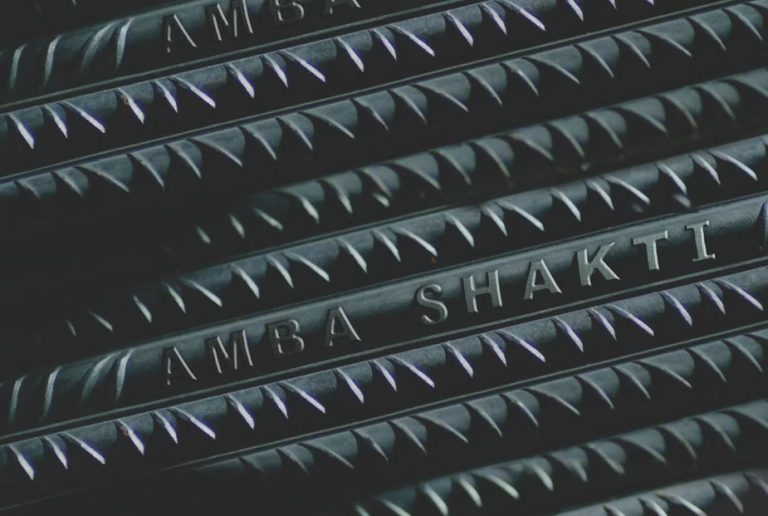
- Check the markings. Genuine bars carry the manufacturer’s name or logo and grade embossed at regular intervals along the bar.
- Look for the BIS mark and ask for the licence number.
- Ask for the test certificate and match the heat or batch number to the tag on the bundle.
- Weigh a one-metre cut and compare with the weight chart; large shortfalls are a warning sign.
- Inspect the ribs. They should be uniform and well defined along the whole length.
- Be wary of very low prices, unmarked bars and dealers who cannot name the grade.
- For large orders, have samples tested at an accredited laboratory.
See our detailed guide: How to identify original TMT bars before buying.
Frequently asked questions
Which is the best TMT bar in India for house construction?
There is no single best brand. Choose a BIS-certified Fe 500D or Fe 550D bar from a brand with genuine dealer stock in your city, and match the grade to your structural drawing.
What is the difference between sariya and TMT bars?
They are the same product. Sariya is the everyday Hindi word for reinforcement bars; TMT (thermo-mechanically treated) describes how the bars are made.
Which grade is best for a house: Fe 500D or Fe 550D?
Fe 500D is the usual choice for low-rise homes. Fe 550D is used for taller or more heavily loaded buildings. Your structural engineer’s design decides.
What does the D in Fe 500D mean?
D stands for ductility. D-grade bars stretch more before breaking, which helps buildings survive earthquakes.
What is IS 1786?
IS 1786 is the Indian Standard for high-strength deformed steel bars used in concrete. It sets limits for strength, elongation, chemistry and weight.
What is the TMT bar price per kg today?
Prices change regularly. As of 2 November 2026, the indicative Amba Shakti TMT bar prices are ₹68–₹72 per kg for Fe 550 and Fe 550D, and ₹70–₹74 per kg for Fe 550 CRS, before GST. Actual prices may vary depending on grade, bar size, city and order quantity.
Check our live TMT bar price page for the latest rates.
How do I check whether TMT bars are genuine?
Check the embossed brand and grade, the BIS mark, the test certificate and the weight per metre. See the checklist above.
Which TMT bar is best for earthquake-prone areas?
Use D-grade bars (Fe 500D or Fe 550D) from a BIS-certified producer, as specified in your seismic design.
Which TMT bar is best for coastal areas?
Corrosion-resistant (CRS) bars are designed for humid and coastal conditions. Ask for the CRS test report and confirm the grade.
How much steel is needed for a 1,000 sq ft house?
About [3,500–4,500] kg is a rough estimate for a typical residential building, but the structural design decides the real figure.
Are costlier TMT brands always better?
No. Pay for certified grade, consistent weight and reliable supply, not only for the name. Compare quotes for the same grade and size.
Which TMT bar sizes are used in house construction?
Most houses use 8 mm to 16 mm bars, with 20 mm and above in columns and foundations of heavier structures.
How long do TMT bars last?
Properly embedded in good-quality concrete with adequate cover, TMT bars are designed to last for the life of the structure, typically 50 years or more.
How should TMT bars be stored on site?
Store them off the ground on supports and under a cover, away from standing water and soil, to limit rust before use.
What if the contractor uses a lower grade than the drawing?
The structure will not perform as designed. Compare the stamped grade and test certificate with the drawing, and raise any mismatch with your engineer before the steel is used.
Can I use different brands in one building?
It is possible if each brand is BIS-certified and matches the grade on the drawing, but mixing makes quality tracking harder. Ask your structural engineer.
Conclusion
The best TMT bar for your project is the one that matches your structure’s grade, your seismic zone and climate, and that you can buy from a genuine dealer with a BIS mark and test certificate. Compare brands on those facts, not on slogans. If you would like to discuss Amba Shakti bars for your project, contact our team or find a dealer.
Related guides